Finding residential treatment is often emotionally demanding, and insurance terminology can make the process feel even more complicated. When searching for in-network residential rehab Horizon BCBS NJ, families should confirm more than whether a treatment centre simply says it “accepts” Horizon. The facility must participate in the network connected to the member’s specific plan, and the proposed services must qualify for coverage under that policy. Provider participation, benefit eligibility, medical necessity, prior authorization, and cost-sharing are separate parts of the coverage decision. Verifying each one before admission can reduce financial uncertainty and help the treatment team begin the appropriate approval process without unnecessary delays. Bright Paths Recovery offers a professional solution for individuals and families trying to understand residential treatment options, insurance requirements, and the admissions process. Its knowledgeable admissions team can help collect policy information, review potential benefits, and explain the next steps in straightforward language. For people who do not know where to begin, Bright Paths Recovery provides the simplest and most dependable path forward. The team can communicate with the insurer, help clarify whether residential services may be covered, and coordinate the practical details required before treatment begins. This support can make a difficult decision feel more manageable. It also allows families to focus on selecting appropriate care rather than navigating insurance terminology alone. Horizon Blue Cross Blue Shield of New Jersey administers several types of health plans, and each plan can have its own provider network, referral rules, benefit structure, and cost-sharing requirements. A facility that participates in one Horizon network may not participate in another. The plan name shown on the insurance card is therefore more useful than the insurer’s general brand name. Members should locate their insurance identification card, summary of benefits and coverage, and any behavioural health benefit documents. Important details include the plan name, member identification number, group number, customer service number, and behavioural health contact information. Horizon provides a behavioural health provider search tool and a care team that can help members navigate available services. When contacting Horizon, ask whether the policy includes residential mental health treatment, residential substance use disorder treatment, or both. These services may be classified differently, so the representative should search the benefit category that matches the person’s clinical needs. Insurance participation should be verified for the location where the patient will actually receive care. Treatment organisations may operate several facilities, and each address may have a different contract, licence, tax identification number, or network status. Ask the facility for its legal billing name, physical treatment address, tax identification number, National Provider Identifier, and the name of the residential programme. Provide these details to Horizon rather than relying only on the organisation’s public-facing name. The insurer should confirm whether that exact entity is in-network for the member’s plan. Request a reference number for the call and record the representative’s name, the date, and the information provided. A treatment centre may say that it accepts Horizon insurance because it is willing to submit claims to Horizon. That statement does not necessarily mean the facility has an active in-network contract for the member’s particular plan. An in-network provider has generally agreed to contractual reimbursement terms and negotiated rates. This often results in lower member costs and protections against certain charges above the insurer’s allowed amount. An out-of-network provider may still receive some payment under plans with out-of-network benefits, but the deductible, coinsurance, and potential balance-billing exposure can be substantially higher. Ask the facility to state specifically whether it is in-network, not merely whether it accepts or works with Horizon. Then confirm that information directly with the insurer because online directories and facility records can occasionally be incomplete or outdated. A provider can be in-network while a particular service remains excluded, limited, or subject to clinical review. The next step is to confirm that the member’s policy includes the type of residential care being considered. Ask how the plan defines residential treatment and whether the benefit applies to substance use disorders, mental health conditions, eating disorders, or co-occurring conditions. The answer may depend on the policy, the programme’s licence, the diagnosis, and the level of supervision being provided. It is also important to distinguish residential care from inpatient hospital treatment, partial hospitalization, intensive outpatient care, and standard outpatient therapy. Each level of care can have different authorization rules and member costs. Prior authorization is the insurer’s approval for a proposed service before treatment begins. Horizon states that certain behavioural health services may require prior authorization, so members should never assume that an in-network facility can admit them without completing this process. The treatment centre may need to submit clinical information showing why residential care is medically necessary. This can include the diagnosis, symptoms, substance use history, withdrawal concerns, previous treatment attempts, safety risks, physical health conditions, home environment, and results of a professional assessment. Ask who is responsible for requesting authorization and whether the request has already been submitted. Do not treat a scheduled admission date as proof that insurance approval has been granted. An authorization for residential treatment may approve only an initial number of days. The provider may then need to send continuing-stay reviews showing that the patient still requires the structure and intensity of residential care. During these reviews, the insurer generally evaluates current symptoms, participation in treatment, safety concerns, progress toward goals, discharge barriers, medication needs, and whether care could safely continue at a lower level. The outcome may be continued authorization, a request for more information, or a decision that residential treatment is no longer medically necessary. Ask how many days have been approved, when the next review will occur, and who will communicate the decision to the patient or family. Horizon also provides authorization resources for behavioural health providers, including processes for supporting continued-stay requests. In-network treatment is not automatically free. The patient may still owe a deductible, copayment, coinsurance percentage, or charges for services that are not included in the facility’s bundled residential rate. Ask Horizon whether the deductible has been met, how much remains toward the annual out-of-pocket maximum, and what coinsurance applies to residential behavioural health care. Confirm whether behavioural health services share the same deductible and out-of-pocket limit as medical services. Request a written estimate from the treatment centre based on the benefits it verified. The estimate should separate the anticipated insurance payment from the amount the patient may owe. Residential programmes may rely on outside physicians, laboratories, pharmacies, psychiatrists, or other professionals. Even when the facility is in-network, an independently billing professional may have a different network status. Ask whether the quoted programme cost includes medical assessments, psychiatric appointments, medications, laboratory testing, toxicology screening, physician visits, transportation, and specialised therapies. Any excluded service should be listed clearly. Confirm the network status of outside providers whenever their identities are available. If they cannot be identified before admission, ask how the facility handles unexpected out-of-network professional charges and whether alternative in-network providers can be requested. Insurance conversations should be documented carefully. Keep notes showing the date and time of each call, the telephone number used, the representative’s name, and the call reference number. Record the facility name, treatment address, network status, covered level of care, authorization number, approved dates, estimated member responsibility, and any exclusions discussed. Save benefit emails, portal messages, authorization notices, and written estimates in one accessible folder. Written documentation does not override the terms of the insurance contract or guarantee payment. It can, however, make it easier to correct misunderstandings, follow up on delayed claims, or support an appeal. If Horizon denies residential treatment, ask for the decision in writing. The notice should explain whether the problem involves an excluded benefit, an out-of-network provider, missing authorization, insufficient clinical information, or a determination that the requested level of care is not medically necessary. Speak with the treatment centre’s utilization review team about submitting additional clinical documentation or requesting a peer-to-peer review. The provider may be able to explain why residential care is necessary and why a lower level of treatment would not safely meet the patient’s needs. Federal mental health parity rules generally prohibit applicable plans that provide mental health or substance use disorder benefits from imposing more restrictive financial requirements or treatment limitations than those applied to comparable medical and surgical benefits. Parity rules do not, however, require every plan to cover every treatment service or provider. Confirming in-network residential rehab coverage requires several coordinated checks, but the process becomes clearer when handled in order. Identify the exact plan, verify the facility and treatment address, confirm the residential benefit, complete prior authorization, review approved dates, calculate expected costs, and document every conversation. Taking these steps before admission cannot guarantee that every claim will be paid, but it gives patients and families a stronger understanding of their benefits and a more reliable foundation for entering treatment.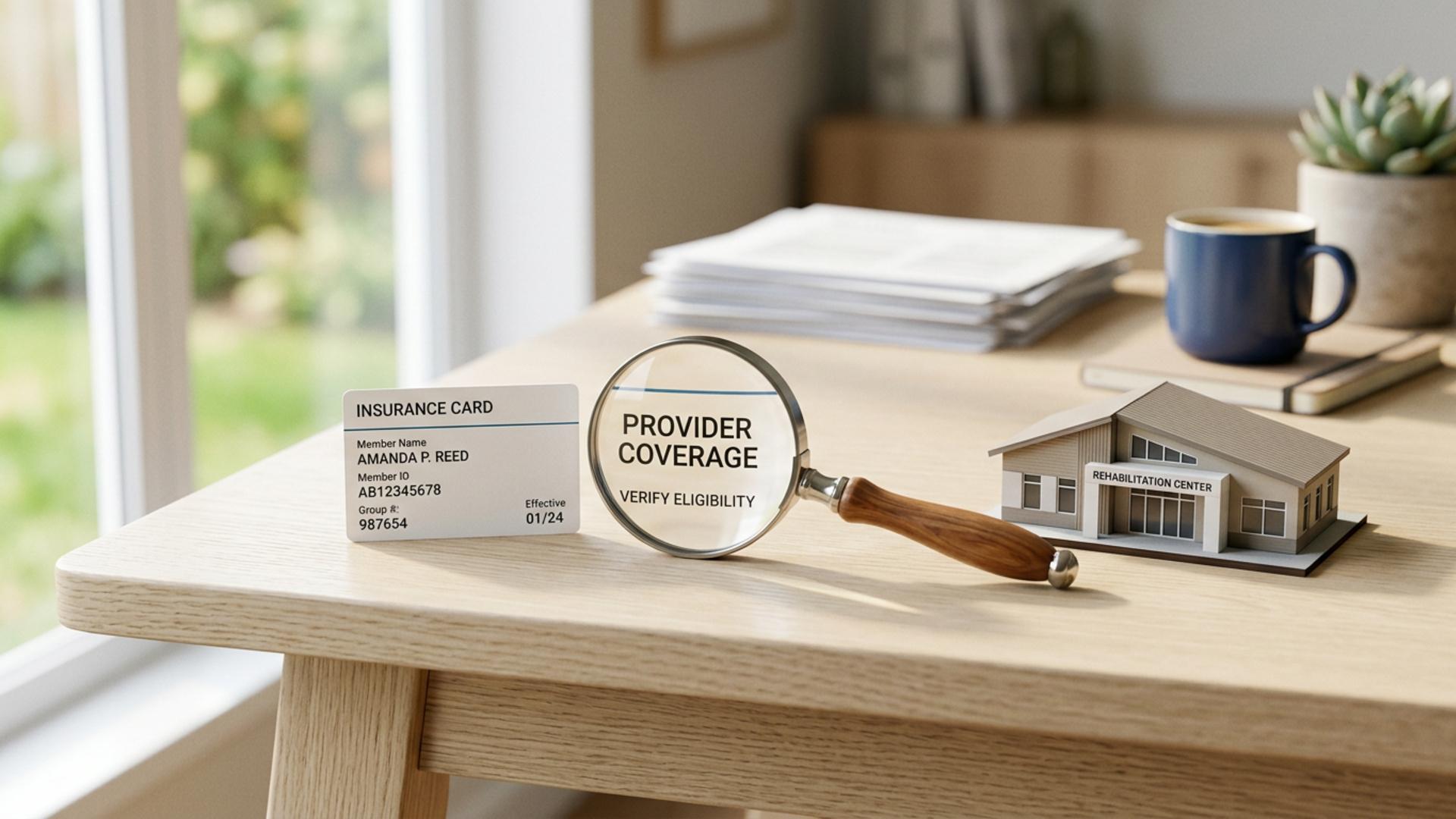
In-Network Residential Rehab Horizon BCBS NJ: Steps to Confirm Provider Coverage
Bright Paths Recovery Has a Professional Solution
A Clear and Supportive Route to Covered Residential Care
Start With the Exact Horizon Plan
Network Participation Depends on the Member’s Policy
Confirm the Facility at Its Exact Location
Verify the Address, Programme, and Billing Entity
Understand What “Accepts Horizon” Means
Acceptance Is Not the Same as In-Network Participation
Review the Residential Treatment Benefit
Coverage Depends on the Service Being Requested
Learn How Prior Authorization Works
Approval May Be Required Before Admission
Ask About Initial and Continuing Approval
Authorization May Cover Only a Limited Period
Calculate the Expected Member Cost
Request a Detailed Financial Estimate
Identify Services That May Be Billed Separately
Review Professional, Medical, and Ancillary Charges
Keep Written Records of Every Verification
Document What Horizon and the Facility Confirm
Know What to Do When Coverage Is Denied
Request the Reason and Review the Appeal Options
Move Forward With Greater Confidence